top of page
Search

Renewable energy – powering a safer and prosperous future

ree

Renewable energy – powering a safer and prosperous future

Energy is at the heart of the climate challenge – and key to the solution.

Most of the greenhouse gases that trap heat in the Earth's atmosphere come from burning fossil fuels to produce energy, mainly for electricity and heat. In 2023, the power sector was the largest source of global greenhouse gas emissions.

The science is clear: to avoid the worst impacts of climate change, emissions must be reduced by almost half by 2030, and reach net-zero by 2050.

To achieve this, we need to end our reliance on fossil fuels and invest in alternative sources of energy that are clean, accessible, affordable, sustainable, and reliable.

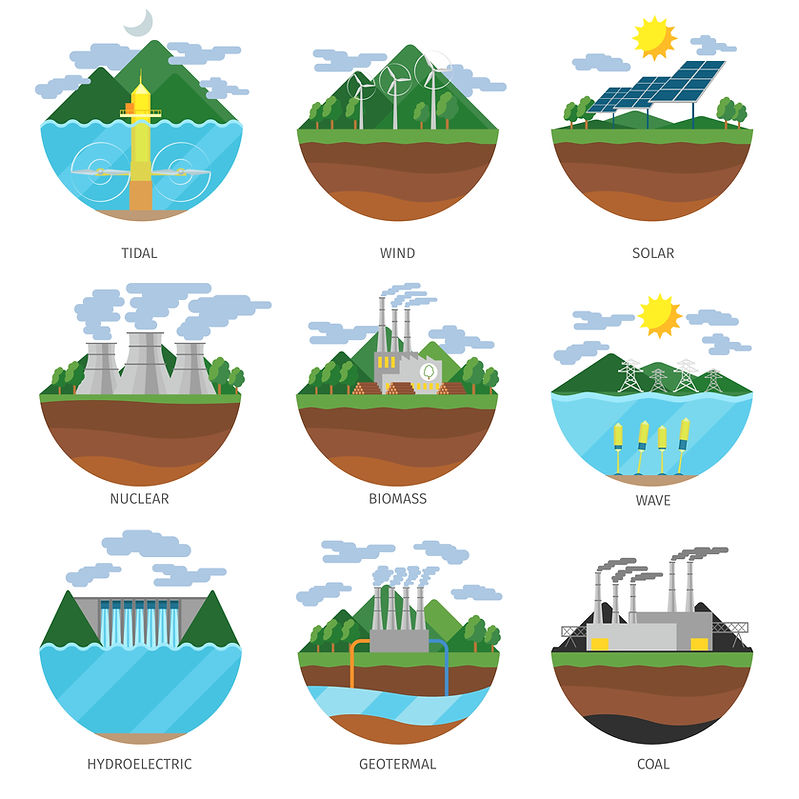
Renewable energy sources — such as sunlight, wind, water, organic waste, and heat from the Earth — are abundant, replenished by nature, and emit little to no greenhouse gases or air pollutants.

Fossil fuels still account for nearly 60 per cent of electricity generation, but cleaner sources of energy are gaining ground. Between 2015 and 2024, annual electricity capacity of renewables increased by around 2,600 gigawatts (GW) - a 140 per cent increase. In the same period, fossil fuels electricity capacity only increased by around 640 GW (16 per cent).

Here are five reasons why accelerating the transition to clean energy is the pathway to a healthy, livable planet today and for generations to come.

1. Renewable energy sources are all around us
About 80 per cent of the global population lives in countries that are net-importers of fossil fuels - that’s about 6 billion people who are dependent on fossil fuels from other countries, which makes them vulnerable to geopolitical shocks and crises.

In contrast, renewable energy sources are available in all countries, and their potential is yet to be fully harnessed. The International Renewable Energy Agency (IRENA) estimates that 90 percent of the world’s electricity can and should come from renewable energy by 2050.

Renewables offer a way out of import dependency, allowing countries to diversify their economies and protect them from the unpredictable price swings of fossil fuels, while driving inclusive economic growth, new jobs, and poverty alleviation.
2. Renewable energy is cheaper
Today, renewable energy is the most affordable source of power in most parts of the world.

Prices for renewable energy technologies are dropping rapidly. Over 90 per cent of new renewable projects are now cheaper than fossil fuels alternatives. At the same time, solar and offshore wind are now respectively 41 per cent and 53 per cent cheaper than fossil fuels.

Declining prices are making renewable energy more attractive worldwide – including to low- and middle-income countries, where most of the future demand for new electricity will arise. This creates a real opportunity for much of the new power supply over the coming years to come from low-carbon sources. By 2040, for instance, Africa could generate 10 times more electricity than it needs – entirely from renewables.

Renewable energy can also help meet new electricity demand, particularly for Artificial Intelligence (AI) and data centres. A typical AI data centre eats up as much electricity as 100,000 homes. Every major tech firm should switch to 100 per cent renewables to power data centres by 2030.

Cheap electricity from renewable sources could provide 65 per cent of the world’s total electricity supply by 2030. It could decarbonize 90 per cent of the power sector by 2050, massively cutting carbon emissions and helping to mitigate climate change.

3. Renewable energy is healthier
According to the World Health Organization (WHO), about 99 percent of people in the world breathe air that exceeds air quality limits and threatens their health. Air pollution is associated with 7 million premature deaths every year.

The unhealthy levels of fine particulate matter and nitrogen dioxide originate mainly from the burning of fossil fuels. The economic health damage caused by air pollution amounts to $8.1 trillion a year, equivalent to 6.1 per cent of global GDP.

Switching to clean sources of energy, such as wind and solar, helps address not only climate change but also air pollution and health.

4. Renewable energy creates jobs
Clean energy sector jobs already outnumber fossil fuel jobs – employing almost 35 million people worldwide. In 2023, 16.2 million people were employed in the renewable energy sector, up from 13.7 million in 2022.

For every dollar invested, renewable energy creates three times as many jobs as the fossil fuel industry. The IEA estimates that the transition towards net-zero emissions will lead to an overall increase in energy sector jobs: while about 5 million jobs in fossil fuel production could be lost by 2030, an estimated 14 million new jobs would be created in clean energy, resulting in a net gain of 9 million jobs.

In addition, energy-related industries will need 16 million more workers, for instance to take on new roles manufacturing electric vehicles and hyper-efficient appliances, or in innovative technologies such as hydrogen economy. This means that a total of more than 30 million jobs could be created in clean energy, efficiency, and low-emissions technologies by 2030.

Ensuring a just transition, placing the needs and rights of people at the heart of the energy transition, will be paramount to make sure no one is left behind.

5. Renewable energy makes economic sense
In 2024, $2 trillion went into clean energy – $800 billion more than fossil fuels and up almost 70 per cent in ten years. In 2023 alone, clean energy sectors drove 10 per cent of global GDP growth.

Furthermore, energy-related carbon dioxide emissions are growing more slowly than the global economy. Emissions growth slowed to 0.8 per cent in 2024, while the global economy expanded by more than 3 per cent.

Yet, the fossil fuel industry continues to be heavily subsidized. About $7 trillion was spent on fossil fuels in 2022, including through explicit subsidies, tax breaks, and health and environmental damages that were not priced into the cost of fossil fuels.

In comparison, about $4.5 trillion a year needs to be invested in renewable energy until 2030 – including investments in technology and infrastructure – to allow us to reach net-zero emissions by 2050.

The upfront cost can be daunting for many countries with limited resources, and many will need financial and technical support to make the transition. But investments in renewable energy will pay off. Additionally, the reduction of pollution and climate impacts could save the world up to $4.2 trillion per year by 2030.

Moreover, efficient and reliable renewable technologies can create a system less prone to market shocks and improve resilience and energy security by diversifying power supply options.

Learn more about how many communities and countries are realizing the economic, societal, and environmental benefits of renewable energy.

Will developing countries benefit from the renewables boom? Learn more here.

Solar Panels
What is renewable energy?
Derived from natural resources that are abundant and continuously replenished, renewable energy is key to a safer, cleaner, and sustainable world. Explore common sources of renewable energy here.

Solar Panels

Illustration showing a hand putting a coin in a piggy bank, with small windmills behind it
Finance
How will the world foot the bill? We explain the issues and the value of financing climate action.

Illustration with a hand holding an ice cream cone, with the earth globe inside it and starting to melt
Climate issues
Learn more about how climate change impacts are felt across different sectors and ecosystems.

1. Renewable Energy will likely be shaped by a dramatic shift toward renewable sources. Some of the main trends are:


Solar Power: Solar energy is rapidly becoming one of the most affordable and widely used sources of renewable energy. The future of solar power will likely involve improvements in energy storage (e.g., advanced batteries), photovoltaic efficiency, and the integration of solar panels into everyday infrastructure (like solar roads, building-integrated solar panels, and solar windows).

Wind Power: Offshore wind farms are gaining momentum, especially in regions with high wind potential. Technological advancements in turbine design and energy storage systems will make wind energy even more cost-competitive and reliable.

Geothermal Energy: Geothermal energy is underutilized but has huge potential. Innovations in deep drilling technology could unlock geothermal resources in areas not currently accessible, providing a consistent, baseload power source.

Hydropower: While hydroelectric power has been around for a long time, innovations like small-scale or "run-of-river" systems can reduce environmental impact and make hydropower viable in more regions.

2. Energy Storage & Batteries
One of the biggest challenges with renewable energy is that it’s intermittent. The wind doesn’t always blow, and the sun doesn’t always shine. As a result, efficient energy storage is crucial.

Lithium-ion Batteries: Currently, lithium-ion batteries are the most popular solution for storing energy from renewables. But as demand grows, better alternatives like solid-state batteries, flow batteries, and sodium-ion batteries are being explored.

Grid-scale Storage: Large-scale storage solutions like pumped hydro storage and compressed air energy storage could allow excess renewable energy to be stored and released when needed.

3. Hydrogen Energy
Hydrogen has been gaining attention as a future fuel source. Green hydrogen, produced by electrolysis using renewable energy, is particularly promising because it can be used in industries like steel manufacturing and transport (especially in heavy-duty vehicles) where electrification is harder.

Hydrogen Fuel Cells: For sectors like transport, hydrogen fuel cells can provide an alternative to battery electric vehicles. They can also be used for backup power and off-grid systems.

Hydrogen as Storage: Hydrogen can act as an energy storage medium, allowing excess electricity to be converted into hydrogen and later used to generate power when needed.

4. Nuclear Fusion
While nuclear fission has its drawbacks (e.g., waste, safety concerns), nuclear fusion could be the “holy grail” of future energy. Fusion promises a nearly unlimited, clean energy source with minimal waste, using fuels like deuterium (from seawater) and lithium.

Breakthroughs in Fusion: Organizations like ITER (International Thermonuclear Experimental Reactor) and startups like Commonwealth Fusion Systems are making strides. However, the technology is still in the experimental stage, and widespread commercial fusion power may be decades away.

5. Decentralized Energy Systems

The future of energy may also see a shift toward decentralized or distributed energy systems. This involves local energy production through solar panels, small wind turbines, or even microgrids, reducing reliance on large, centralized power plants.

Smart Grids: A smart grid uses digital communication to detect and react to local changes in energy usage, allowing for more efficient energy distribution and reducing the need for long-distance transmission.

Peer-to-Peer Energy Sharing: Technologies like blockchain may allow individuals or communities to share excess energy directly with one another, creating a more democratic energy system.

6. Carbon Capture, Utilization, and Storage (CCUS)
While the goal is to shift toward clean energy, there are still industries and regions dependent on fossil fuels. To mitigate their impact, carbon capture technologies can capture CO2 emissions before they’re released into the atmosphere.

Direct Air Capture (DAC): This technology involves capturing CO2 directly from the air and either storing it underground or using it for industrial purposes (e.g., converting it into synthetic fuels or materials).

Enhanced Oil Recovery (EOR): One of the commercial applications of captured CO2 is EOR, where CO2 is injected into oil fields to extract more oil, though the long-term climate benefits of this approach are debated.

7. Artificial Intelligence (AI) in Energy Management

AI is becoming a game-changer in optimizing energy systems, from predictive maintenance of power plants to improving the efficiency of energy use at the consumer level.

Smart Cities: AI can optimize everything from transportation to building energy use, making cities more energy-efficient.

AI-Driven Renewable Integration: AI can help predict the availability of renewable energy, optimize grid management, and even control distributed energy resources like solar panels and electric vehicles.

8. The Future of Electric Vehicles (EVs)
As electric vehicle adoption accelerates, the global demand for electricity will grow, pushing the need for a more robust and renewable energy infrastructure.

Vehicle-to-Grid (V2G): EVs can not only consume energy but also return energy to the grid, serving as an additional source of storage for renewable energy.

Faster Charging & Battery Tech: Innovations in charging infrastructure and battery tech (like solid-state batteries) could make EVs more convenient, further driving adoption.

9. The Role of Policy & Regulation
Governments play a crucial role in shaping the future energy landscape. Global agreements like the Paris Agreement set targets for reducing emissions, while national policies can encourage or discourage certain technologies.

Carbon Pricing: Tools like carbon taxes or cap-and-trade systems are intended to make fossil fuels more expensive and incentivize clean energy technologies.

Incentives & Subsidies: Governments often provide subsidies for renewable energy projects, but they also face pressure from fossil fuel industries.

Conclusion
The future of energy is likely to be diverse and technologically integrated, driven by both technological innovations and the urgent need to combat climate change. While challenges remain, the opportunities for creating a cleaner, more sustainable energy system are immense.

If you’re looking for a specific solutions feel free to ask!


1140 Avenue of the Americas

Fl 9, Suite 5054 

New York, New York, 10036

United States of America

917-797-5170

philip@iwpl.org

  • White LinkedIn Icon
  • White Facebook Icon
  • White Twitter Icon
Send Us a Message

Thanks for submitting!

© IWPL Inc 

bottom of page